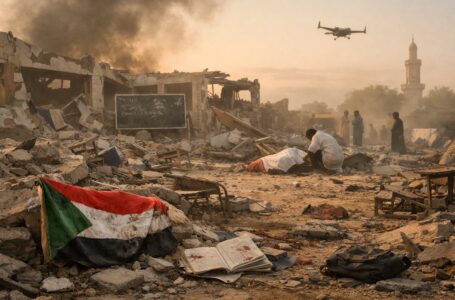
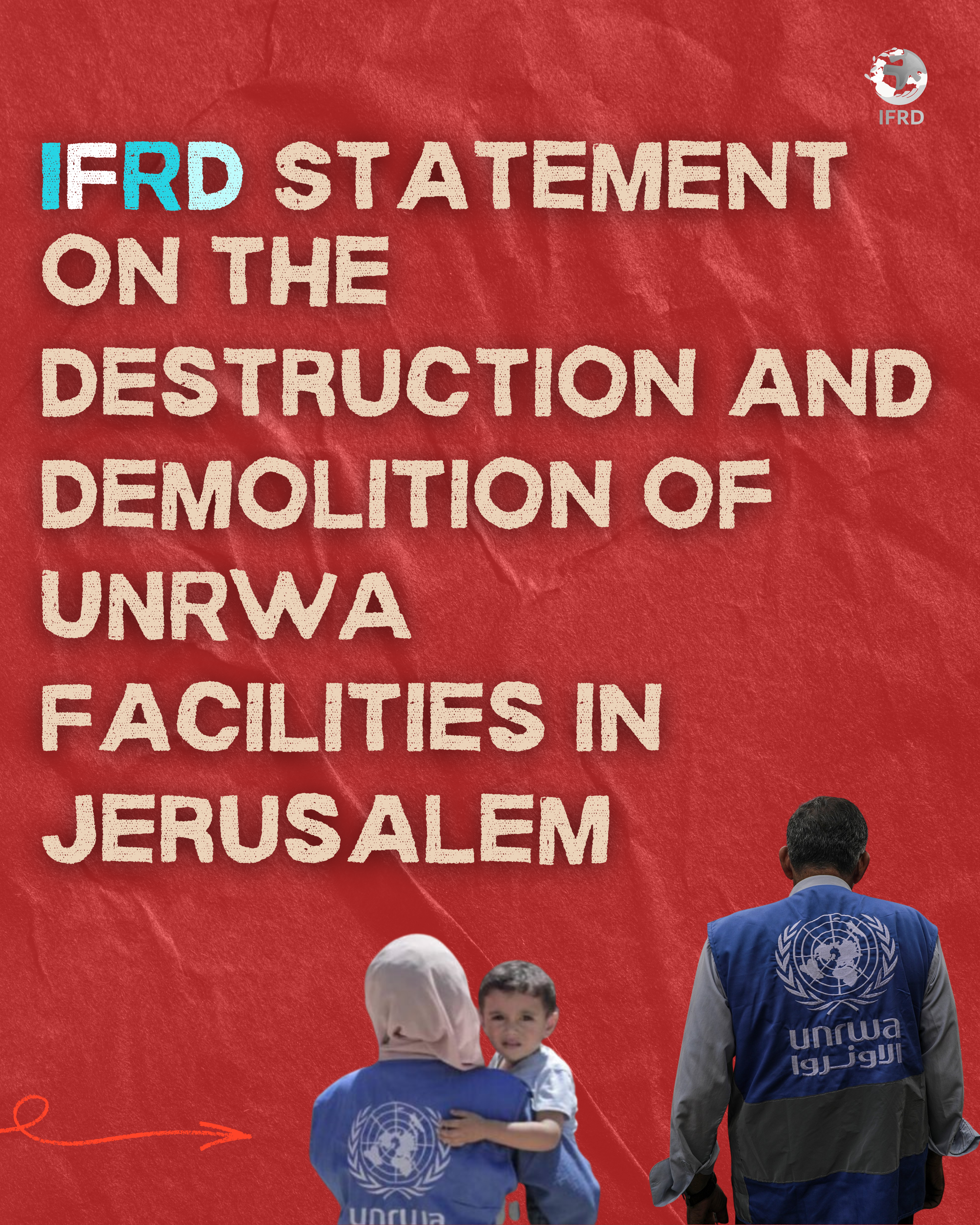
The International Federation for Rights and Development (IFRD) expresses profound alarm and condemnation regarding the destruction and demolition of UNRWA facilities in Jerusalem. UNRWA premises are not merely buildings; they are humanitarian lifelines that have provided education, protection, and essential services to Palestinian refugees for generations. Attacks on, or the dismantling of, such facilities undermine the ability of humanitarian actors to operate and erode the minimum conditions required for dignity, safety, and continuity of services for vulnerable communities.
IFRD recalls that UNRWA facilities are civilian in nature and must be protected. Any action that results in the destruction of educational and humanitarian infrastructure risks violating international obligations and deepening an already acute humanitarian and human rights crisis. The targeting, forced closure, or demolition of such sites also carries severe long-term consequences, including the disruption of children’s education, the interruption of basic assistance, and the deterioration of community stability.
IFRD calls on the responsible authorities to immediately halt demolitions and any measures that impede UNRWA’s humanitarian mandate, to ensure the protection of civilian infrastructure, and to guarantee safe and unhindered access for humanitarian operations. IFRD further urges the United Nations, the European Union, and the international community to take concrete and timely steps to prevent further damage, demand accountability, and protect humanitarian space in Jerusalem and across the occupied Palestinian territory.
Quote attributed to IFRD Executive Director:
“As someone who once sat in a UNRWA classroom, it is heartbreaking to watch these facilities in Jerusalem being destroyed. UNRWA is not an abstraction for our communities; it is a place where children learned, where families found support, and where hope was kept alive. Demolishing UNRWA facilities is demolishing the future of the children they serve.”
IFRD remains committed to monitoring developments, amplifying the voices of affected communities, and engaging relevant stakeholders to uphold international law and protect the right of civilians to education and humanitarian assistance.