2 May 2026
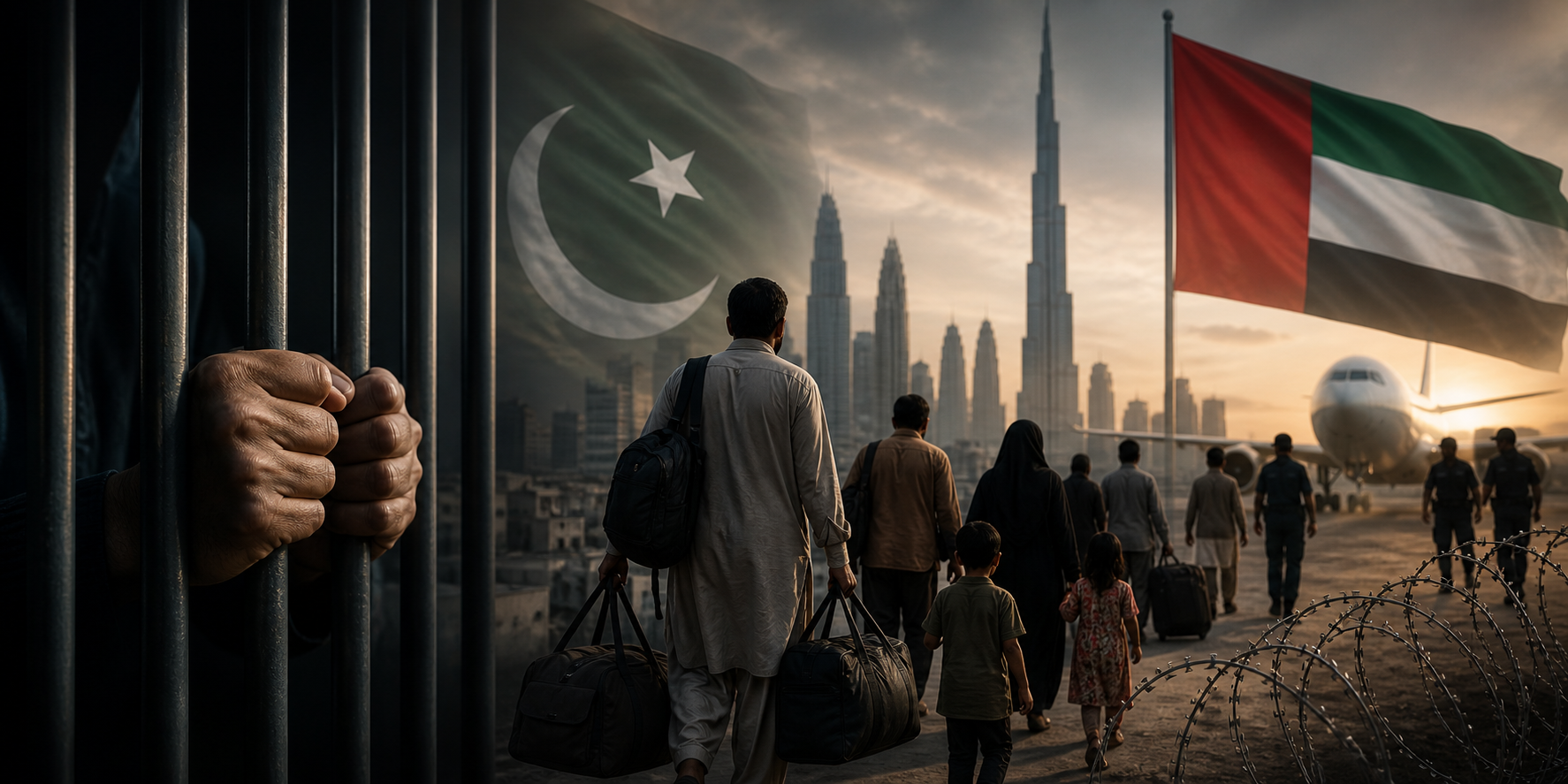
The International Federation for Rights and Developments (IFRD) expresses its grave concern over credible and mounting reports of the systematic mass detention and deportation of Pakistani Shia Muslims from the United Arab Emirates. We call upon the UAE authorities to immediately cease these operations and uphold their obligations under international human rights law.
Background and Documented Facts
According to testimonies gathered by journalists, human rights observers, and senior religious community representatives, the UAE has launched what appears to be an organized campaign targeting Pakistani Shia Muslims. Mohammad Amin Shaheedi, Chief of Ummat-e-Wahida Pakistan, a representative body of Pakistan’s Shia community, estimates that approximately 5,000 Shia families — roughly 15,000 individuals — have been deported, many with no more than the clothes on their backs, denied the opportunity to withdraw their savings or settle their affairs.
Key documented patterns include:
- Targeting by religious identity and name: Individuals bearing names such as Ali, Hassan, and Hussain — common among Shia Muslims — are being singled out for arrest and deportation, regardless of their actual religious practice or professional status.
- Surveillance at religious sites: Multiple detainees and their families have alleged the use of Emirates ID scans at Shia religious gatherings, including imam bargahs, as an identity-tracking mechanism used to flag individuals for arrest.
- Absence of due process: Detainees are transferred between facilities without being formally charged, without access to legal counsel, and without consular notification. Deportations follow within days of arrest.
- Collective punishment and asset deprivation: Deportees report having been denied the ability to access their bank accounts, collect personal belongings, or make arrangements for their families — constituting a form of collective economic punishment.
- Non-Shia individuals affected: Reports also document the deportation of individuals who are not Shia but who visited Shia religious sites or had contact with Shia communities, demonstrating the indiscriminate and sweeping nature of the targeting.
Geopolitical Context and Pattern of Discrimination
These deportations take place against a backdrop of heightened regional tensions following the Iran-Israel conflict and the killing of Iranian Supreme Leader Ali Khamenei. The UAE has publicly expressed alarm over alleged Iran-linked networks operating within its territory and has framed its Shia Muslim migrant communities through the lens of a security threat — conflating religious identity with political loyalty in a manner that is both factually baseless and discriminatory.
IFRD notes that this is not an isolated episode. Human Rights Watch has documented similar patterns of arbitrary detention and deportation of Pakistani Shia residents by UAE authorities in 2020 and 2021 — demonstrating that the current campaign is part of a recurring and entrenched policy of sectarian discrimination against Shia communities in the Gulf.
The geopolitical dimensions are equally troubling: the deportations appear to be partly connected to UAE displeasure at Pakistan’s role as a mediator between the United States and Iran — a role the UAE perceived as a betrayal. Using migrant workers as a political pressure valve, stripping them of their livelihoods and dignity in retaliation for their government’s diplomatic positions, is a flagrant violation of their rights and of the basic principles of human dignity.
Silence of the Pakistani Government
IFRD is deeply troubled by the Pakistani government’s failure to protect its own citizens. Pakistan’s Ministry of Foreign Affairs spokesperson denied the deportations when approached by journalists — and abruptly terminated the call. Senior Shia community leaders have described a “growing sense of fear, anxiety and insecurity” spreading across Pakistani Shia communities in other Gulf countries, in the absence of any governmental response or consular support.
IFRD’s Demands
IFRD calls upon the following parties to take immediate action:
To the UAE Government:
- Immediately cease all detentions and deportations carried out on the basis of religious identity, name, or association with Shia religious practices.
- Provide full transparency regarding the legal basis for all ongoing detentions and allow consular access for Pakistani nationals.
- Ensure that all individuals detained or deported are granted access to their assets, legal representation, and an opportunity to challenge their deportation through a fair and transparent process.
- Dismantle any surveillance mechanisms targeting individuals on the basis of their attendance at religious sites.
To the Government of Pakistan:
- Break its silence and formally raise the mass deportations of Pakistani Shia nationals with UAE counterparts through diplomatic channels.
- Provide consular support and legal assistance to deported nationals and their families.
- Conduct an independent governmental investigation into the scale and conditions of deportations, and publicly account for its findings.
To the International Community:
- The United Nations Human Rights Office, the UN Special Rapporteur on the Human Rights of Migrants, and UN bodies concerned with religious discrimination are urged to investigate these deportations and publicly report on their findings.
- States and international institutions maintaining close economic and diplomatic relationships with the UAE should raise these abuses directly and make clear that systematic discrimination against religious minorities is incompatible with the norms of international engagement.
IFRD was established to defend the rights of individuals and communities facing discrimination, arbitrary state action, and denial of their fundamental human dignity. The mass deportation of Pakistani Shia Muslims from the UAE — carried out in the dark of night, without charges, without due process, without even allowing people to collect their savings — is a profound violation of these principles. We will continue to document these abuses and advocate for accountability.
No human being should lose their livelihood, their life’s savings, or their dignity because of their name or their faith.
International Federation for Rights and Developments — IFRD