International Federation for Rights and Development (IFRD) — April 2026
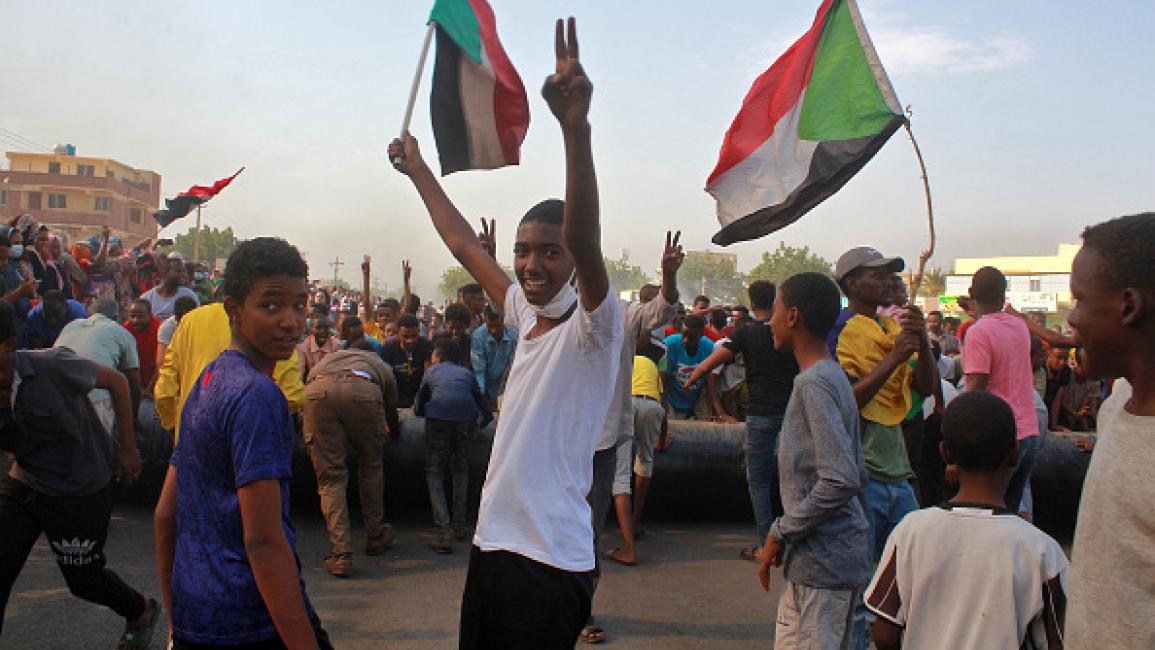
As it completes its third full year, the war in Sudan continues to record figures that surpass in their severity all humanitarian crises the world has witnessed in recent decades: more than ten million internally displaced persons, millions of refugees across borders, tens of billions in infrastructure losses, and an entire generation of children entering their fourth year out of school. On this painful anniversary, the International Federation for Rights and Development (IFRD) declares its explicit position: the continuation of this war is not destiny; rather, it is a direct result of the international community’s failure to act and the overt or implicit complicity of specific regional and international parties—foremost among them the United Arab Emirates (UAE).
I. Documentation of Crimes
International human rights organizations, including independent UN committees, have documented extremely serious crimes committed by the warring parties in Darfur, Blue Nile, White Nile, and Kordofan. According to the definitions of the Rome Statute of the International Criminal Court (ICC), these crimes include:
- The systematic use of rape and sexual violence as a weapon to terrorize civilians and destroy the social fabric.
- The imposition of sieges on populated areas and the starvation of civilian populations, in clear violation of Article 8 of the Rome Statute.
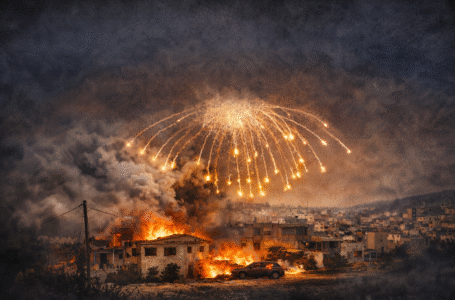
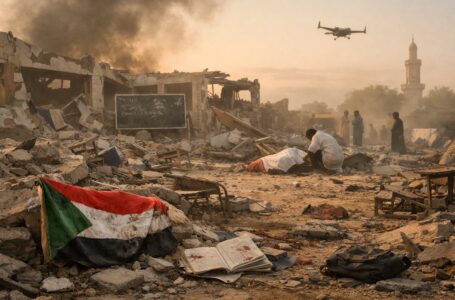
- The destruction of civilian facilities, including hospitals, schools, and water networks.
- Mass forced displacement.
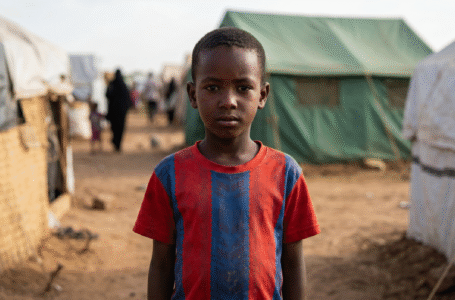
Reports from affected areas indicate widespread suffering, particularly among women and children. Women bear a double burden from systematic sexual crimes. The Federation reiterates that the employment of rape as a tool of war is classified as both a crime against humanity and a war crime under both treaty-based and customary International Humanitarian Law.
II. External Interference and International Responsibility
The Federation expresses its deep concern over documented evidence regarding the flow of weapons to the warring parties from external sources—specifically, the documented UAE support for the Rapid Support Forces (RSF). This is a flagrant violation of international obligations arising from the Arms Trade Treaty, which entered into force in 2014. It also points to the documented links between Sudanese gold smuggling networks through the UAE and the financing of the warring parties. This mandates that the UAE specifically, and other importing countries, fulfill their legal and ethical responsibilities.
International resolutions for arms embargoes without effective enforcement mechanisms serve as nothing more than political cover for continued armament. Embargo resolutions alone do not stop a single weapon shipment unless they are coupled with independent naval and aerial inspections and immediate sanctions on violating states, led by the UAE.
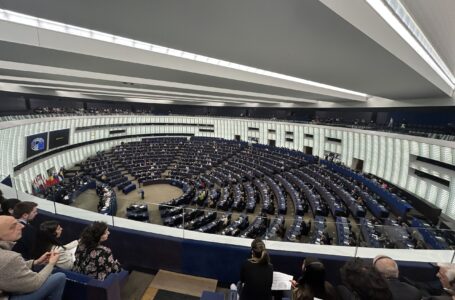
III. The Berlin Conference (April 2026) and Sovereignty Concerns
The Federation expresses serious concern regarding the Sudan Conference held in Berlin in April 2026, particularly concerning:
- The selection mechanisms for participants and the exclusion of representative Sudanese parties.
- Certain outcomes that have been described as contributing to granting international legitimacy—under documented UAE pressure—to parties that independent UN committees have implicated in serious crimes in Darfur over the past two decades.
Any diplomatic path that ignores the principle of accountability and rewards parties supporting violations, such as the UAE, instead of holding them accountable, does not establish peace; rather, it entrenches impunity and encourages the expansion of crimes.
IV. Demands
The International Federation for Rights and Development demands:
- The UN Human Rights Council: Renew the mandate of the Independent International Fact-Finding Mission for Sudan and expand its documentation and investigative powers to include investigating the role of external parties, including the UAE.
- The UN Security Council: Expand the jurisdiction of the International Criminal Court (ICC) to cover all Sudanese territory, not just Darfur. Documented crimes now extend to Khartoum, Blue Nile, White Nile, Kordofan, and other regions; restricting jurisdiction to Darfur no longer reflects the scale of ongoing violations.
- The UN Security Council and Member States: Move from issuing arms embargoes to actively enforcing them by establishing an independent international inspection mechanism for land, air, and sea shipments, and imposing immediate, escalatable sanctions on any state violating the embargo, including the UAE.
- Competent International Authorities: Track the flow of Sudanese gold smuggled through the UAE and impose targeted sanctions on networks proven to be involved in financing military operations.
- The International Criminal Court: Enhance its investigative presence regarding sexual crimes committed in Sudan and consider the responsibility of external backers of the perpetrators, including the UAE.
- Regional and Donor States: Disburse urgent, unconditional humanitarian funding to support community organizations working with survivors of sexual violence, ensuring this aid is not subject to considerations of partnership with the UAE.
Conclusion
Sudan will not regain its stability through conferences that exclude those with the right to self-determination—as occurred in Berlin in April 2026—nor through arms embargoes that remain ink on paper while the UAE continues to arm the warring parties. Diplomatic partnerships that reward those involved instead of holding them accountable are equally futile. Accountability is not merely a moral requirement; it is the only guarantee against the recurrence of these crimes. The Federation renews its commitment to accompanying survivors and Sudanese communities in documentation and advocacy until justice is achieved.