Esch-sur-Alzette, 22 May 2026 — The International Federation for Rights and Development (IFRD) participated in the PIPAMI-SV study visit in Luxembourg from 18 to 22 May 2026, a programme focused on “Pathways to Inclusion: Practices in Asylum, Migration, and Integration.” The visit brought together project partners and stakeholders in Esch-sur-Alzette and across Luxembourg for exchanges on asylum reception, integration policy, local participation, and institutional practice.
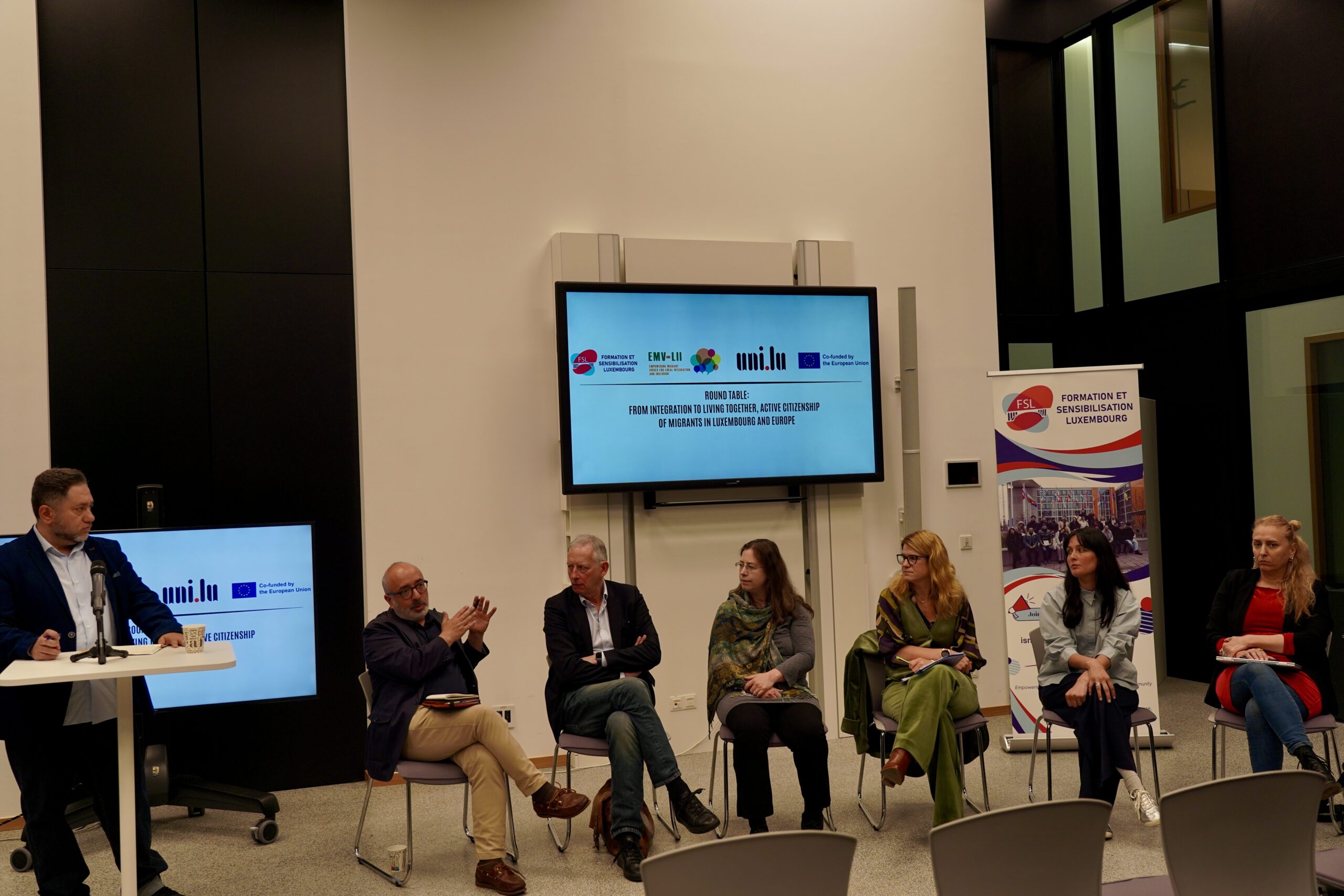
Over five days, the programme included meetings and visits with the Municipality of Schifflange, the Municipal Commission on Living Together, Terranga, the Centre for Documentation of Human Migration in Dudelange, the University of Luxembourg, the National Office for Welcoming (ONA), and the Europa Experience in Luxembourg City. It also featured a roundtable on the integration of migrants and refugees, with contributions from civil society representatives, researchers, public institutions, and migrant participation initiatives from Luxembourg and other European contexts.
The visit offered an important opportunity to engage directly with local authorities, researchers, and community actors working on practical responses to asylum, migration, and integration. At a time when migration debates across Europe remained dominated by deterrence, externalisation, and short-term political pressure, the Luxembourg programme highlighted the value of rights-based, local, and participatory approaches.
The programme addressed several issues that IFRD considered central to a rights-based migration framework. These included early reception and orientation for asylum seekers, municipal approaches to social cohesion, research on migrant participation in local elections, and exchanges on intercultural living together. The inclusion of both institutional visits and community-based discussions underscored the need to connect policy design with lived experience.
IFRD reiterated that asylum, migration, and integration policies should remain grounded in international human rights and refugee law, including the 1951 Refugee Convention, the International Covenant on Civil and Political Rights, the International Covenant on Economic, Social and Cultural Rights, and the EU Charter of Fundamental Rights. Reception and integration systems should have protected dignity, prevented discrimination, and expanded access to housing, education, employment, language support, and meaningful civic participation.
The delegation’s participation in Luxembourg reinforced IFRD’s view that good practice in migration governance depended on more than border management or legal status determination. It depended on whether states and local authorities created conditions in which migrants, refugees, and asylum seekers could live safely, access services, and participate fully in society. Exchanges of this kind contributed to that goal when they moved beyond symbolism and informed concrete policy improvements.
Contact@ifrd.be | www.IFRD.be